James Dewey Watson (1928 – 2025)
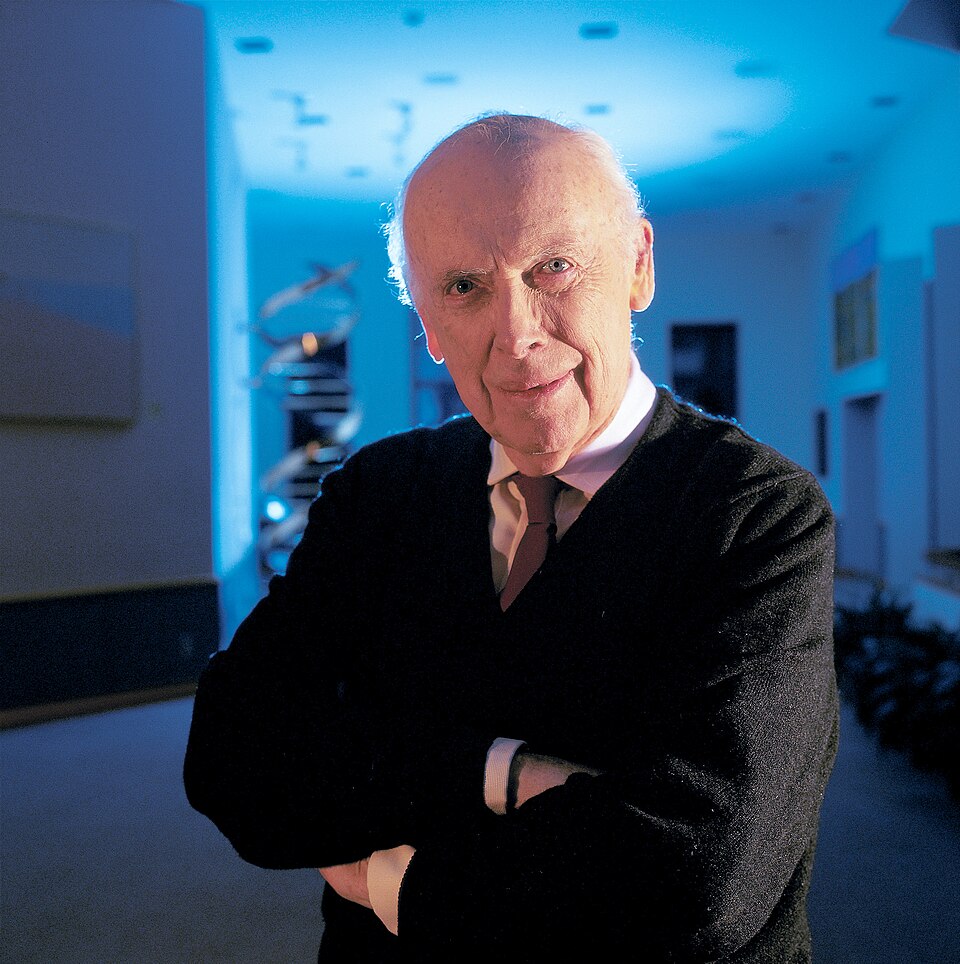
James Dewey Watson (1928–2025) was an American molecular biologist whose collaboration with Francis Crick established the structure of base-paired, double-helical DNA. He entered the University of Chicago, where his early interest in ornithology gradually gave way to genetics. He completed his PhD in 1950 at Indiana University, where he studied bacteriophage genetics under Salvador Luria. After a research fellowship in Copenhagen, he joined Cambridge University’s Cavendish Laboratory in 1951. There, he formed a close intellectual partnership with Francis HC Crick and pursued the molecular structure of DNA through physical models and chemical reasoning.
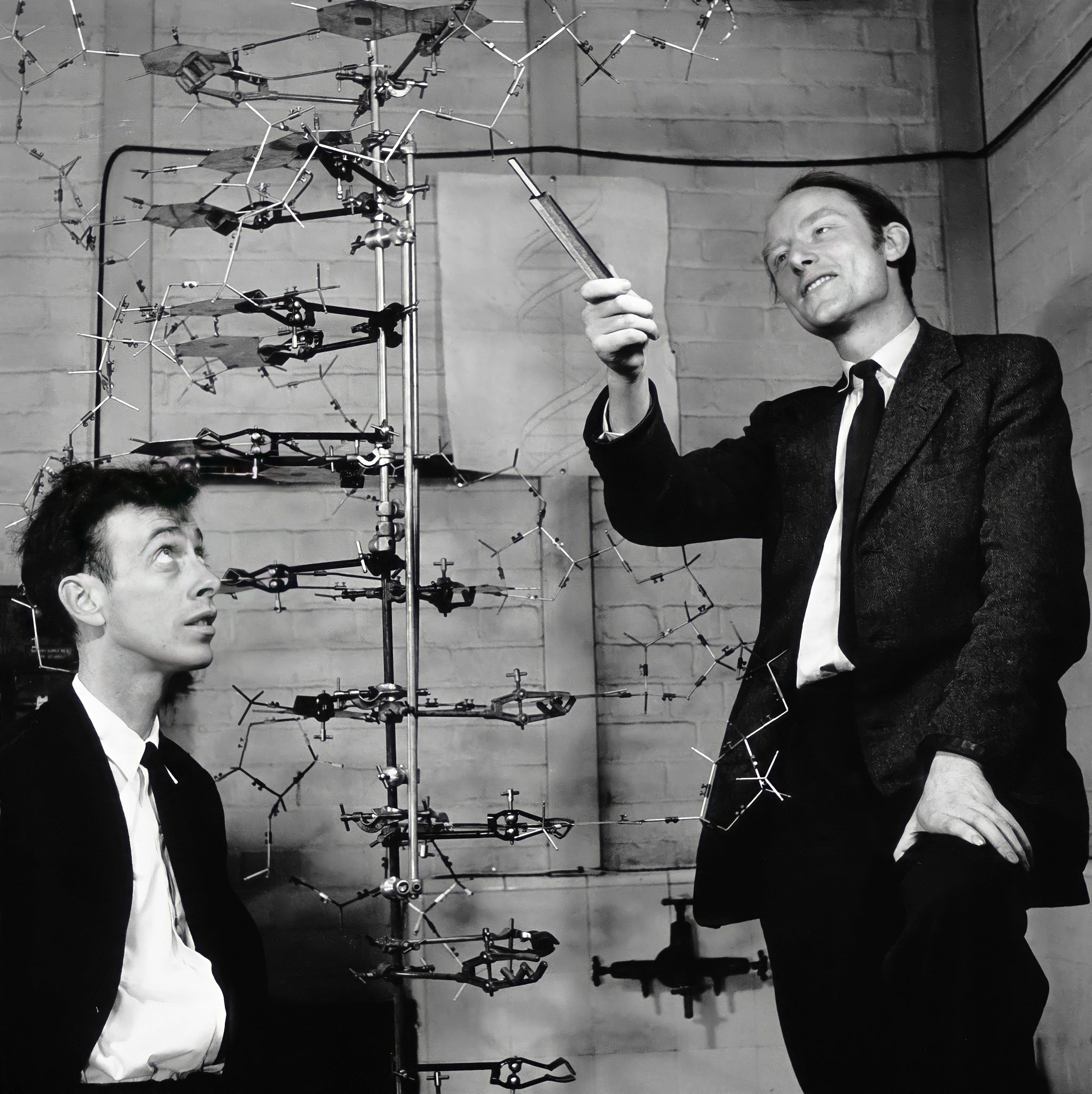
Watson [left] and Crick [right] developed a model of DNA structure in which hydrogen bonds between complementary adenine–thymine and guanine–cytosine base pairs joined two antiparallel sugar-phosphate strands. This "Double Helix" model included inferences from Erwin Chargaff’s chemical analyses, and the X-ray diffraction research of Rosalind Franklin, Raymond Gosling, Maurice Wilkins, and their colleagues at King’s College London. Watson’s recognition of complementary base pairing explained both the molecule’s regular dimensions, immediately suggested a mechanism of gene replication. Their proposal appeared in Nature in April 1953, alongside experimental papers from the Wilkins and Franklin groups. In 1962, Watson shared the Nobel Prize in Physiology or Medicine with Crick and Wilkins. His account of the discovery in The Double Helix (1968) whose vivid account of discovery was widely criticized for its disparaging portrayal of Franklin and other colleagues.
At
Harvard University, Watson investigated protein synthesis,
and his laboratory contributed to the identification of messenger
RNA (mRNA). His textbook, Molecular
Biology of the Gene (1965; 4th ed. 1987)
helped reshape biological education. In 1968, he became
director of Cold Spring Harbor Laboratory, which he
developed into a major center for molecular biology, cancer
research, and scientific education. From 1989 - 1992, he
directed the National Center for Human Genome Research
and helped launch the Human Genome Project. Noted for
unorthodox opinions, often poorly expressed, his
later assertions about racial differences in intelligence
damaged his reputation. In 2014, he sold his Nobel Prize gold
medal to raise money for research; the purchaser
returned it to him. In 2019, Cold Spring
Harbor revoked his honorary titles and condemned his
assertions as scientifically unsupported.